
This post contains affiliate links. This means I will make a commission at no extra cost to you should you click through and make a purchase [ “As an Amazon Associate, I earn from qualifying purchases.” ]. Read the full disclosure here.
Food Trucks From Commercial Fleets: A Complete Guide for Buyers and Operators GuideMechanic.ComIf you’re searching for food trucks from commercial fleets, you’re likely looking for a vehicle that blends reliability, professional build quality, and long-term value.
Food trucks sourced from commercial fleets are often among the best options for entrepreneurs entering the mobile food business. They offer standardized maintenance, proper service records, durable construction, and equipment installed by reputable builders.
In this guide, we’ll break down everything you need to know before buying a food truck from a commercial fleet, including the benefits, what to look for, pricing expectations, inspection tips, financing, and how these trucks compare to privately-owned or DIY-built units.
See Also: Lifted Diesel Trucks for Sale
Food Trucks From Commercial Fleets
Why Choose Food Trucks From Commercial Fleets
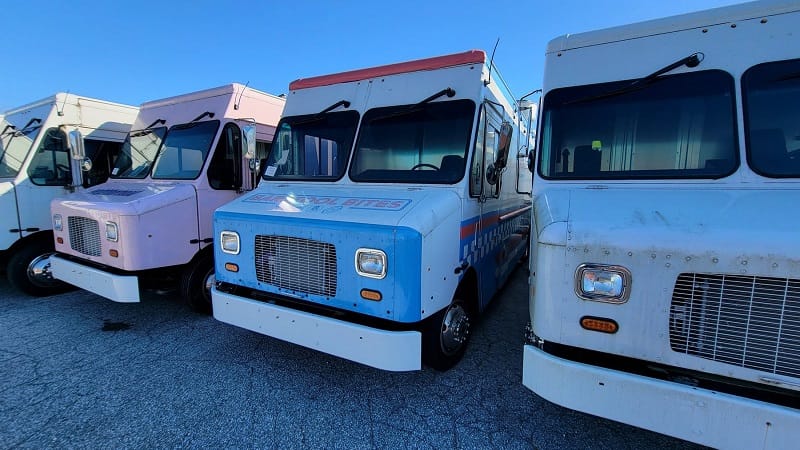
Commercial fleet food trucks are different from privately owned trucks for several reasons, and these differences often translate into major advantages for business owners. Below are the key benefits that make commercial fleet trucks a strong choice.
1. Professional Maintenance and Service Records
Most commercial fleets follow strict maintenance schedules because uptime affects business revenue. This means that vehicles in fleets are usually:
Serviced on time
Inspected regularly
Documented with full maintenance logs
Kept in mechanically sound condition
When you buy a fleet truck, you can expect transparency and trustworthiness in its service history.
2. Standardized Builds With Commercial-Grade Equipment
Commercial fleets often work with licensed food truck builders who install:
Commercial-grade stainless steel kitchens
ADA-compliant service windows
Proper plumbing and wastewater systems
Certified fire suppression systems
Professional electrical layouts
This gives you a safer truck that meets regulations.
3. Higher Overall Reliability
Because commercial fleets typically operate multiple trucks, they invest in:
Durable engines
Reliable powertrain options
Quality generators
Reinforced kitchen interiors
Fleet trucks are built for daily use, meaning they can withstand heavy cooking conditions and constant movement.
4. Easier to Insure and License
Food trucks from commercial fleets often meet regional codes and inspection standards. That makes it easier to:
Pass health inspections
Secure insurance
Register and operate across multiple jurisdictions
This drastically reduces startup delays.
5. Better Resale Value
A fleet-maintained food truck generally holds its value better because buyers trust trucks with proper documentation and commercial-grade build quality.
Types of Food Trucks Found in Commercial Fleets
1. Full Kitchen Food Trucks
These are the most common type in fleets. They come equipped with complete cooking setups:
Griddles
Fryers
Refrigerators
Sinks
Hood and fire suppression
Full kitchen trucks serve menus such as burgers, tacos, BBQ, fried foods, and American comfort meals.
2. Specialty Food Trucks
These trucks serve niche markets and often focus on:
Coffee
Ice cream
Smoothies
Desserts
Vegan or plant-based menus
Fleet operators often maintain multiple specialty trucks for coordinated events.
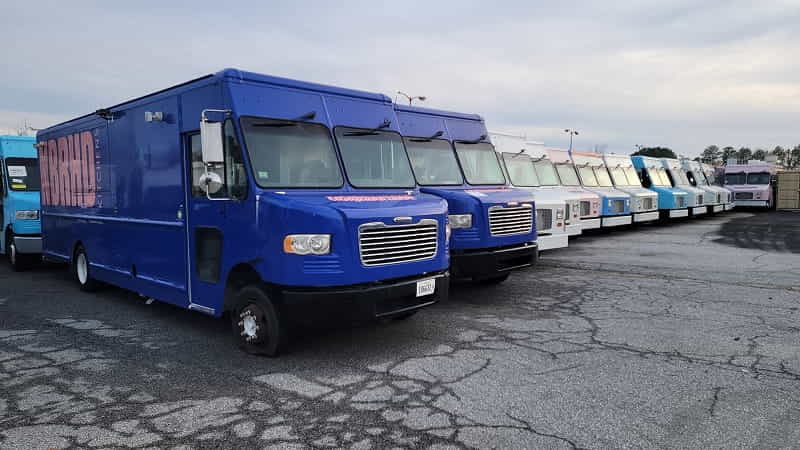
3. Step Vans Converted Into Food Trucks
Step vans are popular because of their boxy shape and spacious interior. Fleet step-van trucks usually feature:
Long service windows
Large prep areas
Better weight distribution
Higher ceilings for staff comfort
Step vans from fleets often have the longest lifespan.
4. Trailer Food Units From Fleets
Some commercial fleet companies operate food trailers rather than trucks. These offer:
Lower cost
Larger cooking space
Easier maintenance
Trailers are common for permanent or semi-permanent food truck setups.
Food Truck Price Table From Commercial Fleets
| Type of Food Truck | Typical Price Range (USD) | Condition Notes |
|---|---|---|
| Full kitchen food truck (used fleet model) | $45,000 – $85,000 | Well maintained, certified equipment |
| High-end step van food truck | $70,000 – $120,000 | Excellent powertrain, heavy-duty build |
| Specialty beverage/dessert truck | $35,000 – $65,000 | Simplified kitchen, lower maintenance |
| Food trailer from a fleet | $18,000 – $50,000 | Good for stationary operations |
| Project/incomplete truck | $10,000 – $30,000 | May need repairs or new equipment |
These prices depend on age, mileage, equipment included, and level of refurbishment.
What to Inspect Before Buying a Fleet Food Truck
1. Engine & Mechanical Condition
Even though fleet vehicles are well maintained, you should inspect:
Engine compression
Transmission shifting
Brake system
Steering responsiveness
Fluid condition and leaks
This ensures long-term reliability.
2. Kitchen Equipment
Check:
Hood and fire suppression certification date
Condition of burners, fryers, refrigeration
Electrical breakers and wiring
Plumbing (fresh water, grey water)
Hot water system
Commercial kitchens must meet local health codes.
3. Generator Condition
A generator is the heart of a food truck. Inspect:
Startup sound
Voltage output
Service history
Fuel type and consumption
Replacing a generator can cost $4,000 to $10,000.
4. Interior Layout and Durability
Commercial fleet trucks are built for durability, but always check:
Floor condition
Stainless steel strength
Drawer sliders and hinges
Ventilation quality
Food prep surface stability
You want a truck that can handle long-term service.
5. Electrical Capacity
Food trucks require strong electrical systems. Confirm:
Total amperage
Number of circuits
Whether equipment can run simultaneously
Breaker health
You don’t want a truck that constantly trips breakers.
Pros and Cons of Buying From Commercial Fleets
Pros
Reliable maintenance
Professional equipment installation
Easier permitting
Better engine and mechanical health
Cleaner and more standardized builds
Higher resale value
Cons
Higher initial cost compared to private sellers
Inventory may be limited to certain models
Some trucks may have high mileage but good upkeep
Fleet trucks may have branding paint that needs removal
Who Should Buy a Commercial Fleet Food Truck
1. First-Time Food Truck Owners
Fleet trucks eliminate guesswork and reduce risk.
2. Expanding Food Truck Businesses
If you run multiple trucks or plan to expand, fleet trucks help maintain consistency across units.
3. Restaurant Owners Going Mobile
A commercial fleet truck gives your business a reliable mobile extension.
4. Event and Catering Operators
Fleet trucks are ideal for heavy, repeated use.
Tips to Get the Best Deal
Compare at least 3 trucks in similar categories
Ask for full maintenance logs
Ensure kitchen equipment is compliant with your region’s laws
Test the generator thoroughly
Negotiate based on cosmetic wear, tires, and equipment age
Avoid trucks that need major electrical repairs
Bring a licensed food truck inspector if possible
Conclusion
Buying food trucks from commercial fleets is one of the smartest moves you can make as a mobile food entrepreneur. These trucks offer professional construction, safer electrical and kitchen systems, trustworthy maintenance history, and overall better durability. While they may cost more upfront, they save significant time, repair costs, and headaches down the road.
Whether you’re launching your first food business or expanding an existing brand, a fleet-maintained food truck gives you a strong foundation for success. With careful inspection and smart buying choices, you can secure a truck that not only looks great but performs reliably for years.

- Food Trucks From Commercial Fleets - February 12, 2026
- Lifted Diesel Trucks for Sale - February 11, 2026
- Lifted Diesel Trucks for Sale Near Me - February 10, 2026